Why does my garage door opener keep running but not lifting the door
Your opener hums, the chain moves, but the door stays put. In Tampa, that's almost always a broken torsion spring or snapped cable - not the motor. Here's how to tell.
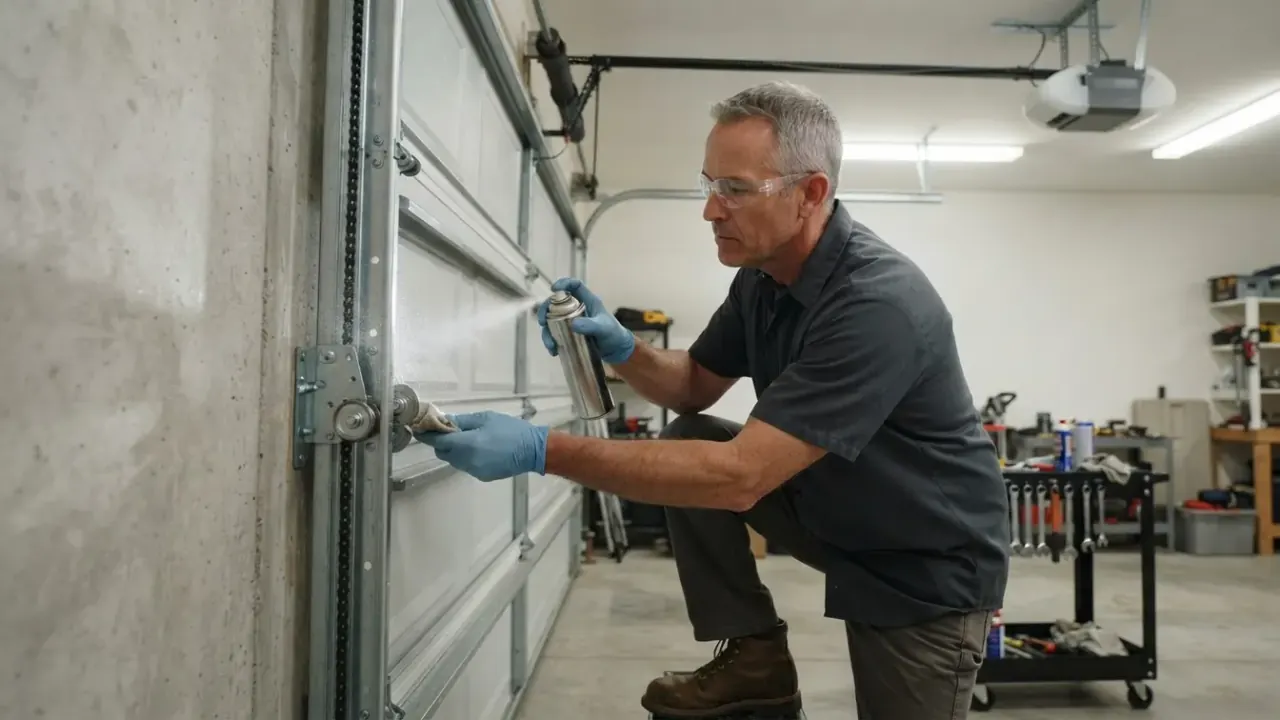
If your garage door opener keeps running but the door doesn't move, the opener motor is almost never the problem. In roughly nine out of ten calls we run in Tampa, the motor is fine - the door isn't lifting because a torsion spring has snapped, a lift cable has come off its drum, or the drive gear inside the opener has stripped. The motor spins, the chain or belt moves, and the door just sits there because the parts that actually carry the door's 150 to 250 pounds of weight have failed.
That's the whole answer. Everything below is how to confirm which of those three it is, what it costs to fix in 2026, and when it's worth doing yourself versus calling us.
The short answer: your opener is fine, the door's lifting system isn't
Garage door opener repair in Tampa is a category of work that covers the motor, logic board, gears, and drive system - but the symptom you're describing usually points somewhere else entirely. A garage door opener is a motor and a logic board; it does not lift the door by itself. It pulls a chain, belt, or screw drive, and that drive pulls a trolley along a rail. The trolley is attached to the door by an arm. If the door won't rise, the break is somewhere between the trolley and the door itself.
Here's the tell: stand in your garage and press the wall button. If you hear the motor run for two to three seconds, see the chain or belt move, and then hear it stop without the door moving an inch, the opener is doing its job. It's trying to lift, hitting resistance it can't overcome, and the safety system is shutting it down. That's a door problem, not an opener problem.
If instead you hear a grinding or clicking noise and the chain doesn't move at all, that's a different failure - usually a stripped gear inside the opener head. That one is genuinely garage door opener repair in Tampa territory.
How a garage door opener actually lifts a door
A standard sectional garage door in Tampa weighs between 130 and 250 pounds depending on whether it's a single-car or double-car door and whether it's insulated. The opener is rated to lift that weight, but only when the door's own counterbalance system is doing most of the work.
That counterbalance is the torsion spring assembly mounted on the wall above the door, or on older doors, the extension springs running along the horizontal tracks. The springs are wound to store energy. When the door is closed, the springs are under tension; when the opener pulls, the springs release that tension and help the door rise. Without working springs, the opener is trying to dead-lift 200 pounds of door with a motor designed for maybe 30 pounds of actual load.
That's why the opener runs but the door doesn't move. The motor is spinning freely because the load it was pulling against is gone - the spring snapped, the cable went slack, and now there's nothing for the opener to fight against except the full weight of the door, which it can't lift.
What a torsion spring failure looks like
Walk into your garage and look at the horizontal shaft above the door. You'll see two springs wound around it. A broken spring will have a visible gap - usually a clean two- to four-inch break in the coil. You may also see a small piece of spring on the floor. Torsion springs are rated in cycles, and a standard builder-grade spring lasts about 10,000 cycles. At four open-and-close cycles a day, that's roughly seven years. In Tampa's humidity, we often see them fail closer to five or six.
What a cable failure looks like
Look at the bottom corners of the door where the cables attach. A snapped cable will be hanging loose, often wrapped around the drum at the top of the track. A cable that's come off the drum but hasn't snapped will be visibly off its groove. Either way, the door is now supported on one side only, which is why it looks crooked when you try to lift it manually.
The five most common causes in Tampa homes
We've been called to thousands of these across Hillsborough County, and the causes cluster tightly. Here's what we actually find, ranked by frequency.
- Broken torsion spring. About 60% of the calls. One spring of the pair snaps, the door becomes too heavy for the opener, and the motor runs without lifting anything.
- Snapped or off-drum lift cable. Roughly 20%. Often happens right after a spring breaks, because the sudden release of tension lets the cable jump the drum.
- Stripped drive gear in the opener. About 10%. Common on older chain-drive units from the 2000s. You'll hear a grinding sound and the chain won't move.
- Disconnected trolley or emergency release pulled. About 5%. Someone pulled the red emergency cord and never re-engaged it, or the trolley arm bolt backed out.
- Door off track or jammed. The remaining 5%. A roller has jumped the track, usually after a car bumper nudge or a failed roller. The opener runs, the door binds.
Notice that four of those five have nothing to do with the opener motor itself. That's the pattern. If you want a sense of how often we see each one, our team handles garage door spring repair in Tampa more than any other single job.
How to tell which one you have in under five minutes
You can narrow this down without tools. Do these checks in order and stop when you find the answer.
Step 1: Pull the emergency release and try to lift the door by hand
Stand inside the garage, pull the red cord hanging from the trolley, and try to lift the door manually. A properly balanced door should rise with one hand and stay put when you let go at waist height. If it feels like you're lifting a small car, the springs are gone. If it lifts easily on one side and binds on the other, you have a cable or track problem.
Step 2: Look at the springs
With the door closed, look at the torsion shaft above the door. A visible gap in the coil means a broken spring. No gap? Check the cables next.
Step 3: Look at the cables
Check both bottom corners. A cable that's snapped, frayed, or off the drum is your answer. Don't try to re-spool it yourself - cables under tension can cause serious hand injuries.
Step 4: Listen to the opener with the door disconnected
With the emergency release still pulled, press the wall button. If the trolley moves smoothly along the rail, the opener is fine. If you hear grinding and the trolley doesn't move, the gear inside the opener head is stripped.
What to watch out for: mistakes that turn a $250 repair into a $900 one
The single most expensive mistake we see is a homeowner who keeps pressing the button. Every time you run the opener against a door with a broken spring, you're loading the motor, the gear, and the logic board with a job they weren't designed for. We've replaced opener heads that would have lasted another five years if the owner had stopped cycling it after the spring snapped.
The second mistake is trying to replace a torsion spring yourself. Torsion springs are wound to 200-plus foot-pounds of torque. If a winding bar slips, the spring can release that energy into your hand or face in a fraction of a second. This is not a job for YouTube and a pair of gloves. We do it with two winding bars and a specific number of quarter-turns matched to your door's height and weight - a 7-foot door typically needs 30 quarter-turns per spring, and getting that number wrong will either leave the door too heavy or slam it shut.
The third mistake is buying the cheapest spring on the shelf. A 10,000-cycle spring costs about $30 less than a 25,000-cycle spring and lasts less than half as long. In Tampa's salt-air and humidity, that difference shows up fast. We install 25,000-cycle springs as standard on every spring job.
Fourth: don't ignore a door that's suddenly noisy. Grinding rollers, squealing hinges, and a shaking door are all early warnings. A garage door tune up in Tampa runs $89 to $149 in 2026 and catches most of these before they turn into a snapped cable.
When to call a professional
Call us the moment you confirm a broken spring, a snapped cable, or a stripped gear. Those three are the ones that cause injuries and secondary damage, and none of them are safe to handle without the right tools and training.
We're garage door repairs Tampa Fl, a local shop working out of Tampa. When you call, we ask two questions - single or double door, and can you see a gap in the spring - and we show up with the right springs and cables on the truck. Most spring and cable jobs are done in 60 to 90 minutes, and we test the door through a full open-and-close cycle before we leave. You get a flat price before we start, not an hourly estimate.
If you're in an older neighborhood like Seminole Heights or West Tampa, where a lot of the housing stock dates to the 1950s and 60s, we also check the track alignment and the opener's force settings while we're there. Those older doors tend to have extension springs rather than torsion, and they fail differently. We handle garage door repair in Tampa across the whole city, from South Tampa to New Tampa.
Frequently Asked Questions
Can I still open my garage door if the spring is broken?
No - not safely. A door with a broken spring weighs 150 to 250 pounds and has no counterbalance. Pulling the emergency release and lifting it by hand risks back injury and a sudden drop. Leave it closed and call for repair.
How much does it cost to fix a garage door that won't lift in Tampa?
In 2026, a torsion spring replacement in Tampa runs $250 to $450 for a single door, including both springs and labor. A snapped cable repair runs $150 to $300. A stripped opener gear replacement is $180 to $350, or $400 to $700 if the whole opener needs replacing.
Why does my opener run for a few seconds and then stop?
That's the safety system doing its job. The opener senses excessive resistance - usually from a broken spring or a bound door - and shuts off to protect the motor. It's not a malfunction. It's a symptom of a door that's too heavy to lift.
Can a broken spring damage my opener?
Yes. Every cycle against a broken spring puts the full door weight on the opener's gear and motor. We've seen openers fail within a week of a spring breaking because the homeowner kept pressing the button. Stop using the opener until it's repaired.
How long do garage door springs last in Tampa?
A standard 10,000-cycle spring lasts about seven years at four cycles a day. In Tampa's humidity and salt air, we typically see them fail at five to six years. Upgrading to a 25,000-cycle spring roughly doubles that lifespan for about $40 more.
Get help with garage door repair in Tampa
If your opener is running and the door isn't moving, stop pressing the button and give us a call. We'll tell you over the phone whether it sounds like a spring, a cable, or the opener itself, and we'll have the right parts on the truck when we arrive.
Call +17739156384 - most spring and cable jobs are same-day, and we quote a flat price before we start.