How to Lubricate Garage Door Rollers and Hinges Yourself
A Tampa homeowner's step-by-step guide to lubricating garage door rollers and hinges. Learn the right lube, the right spots, and when to call a pro.
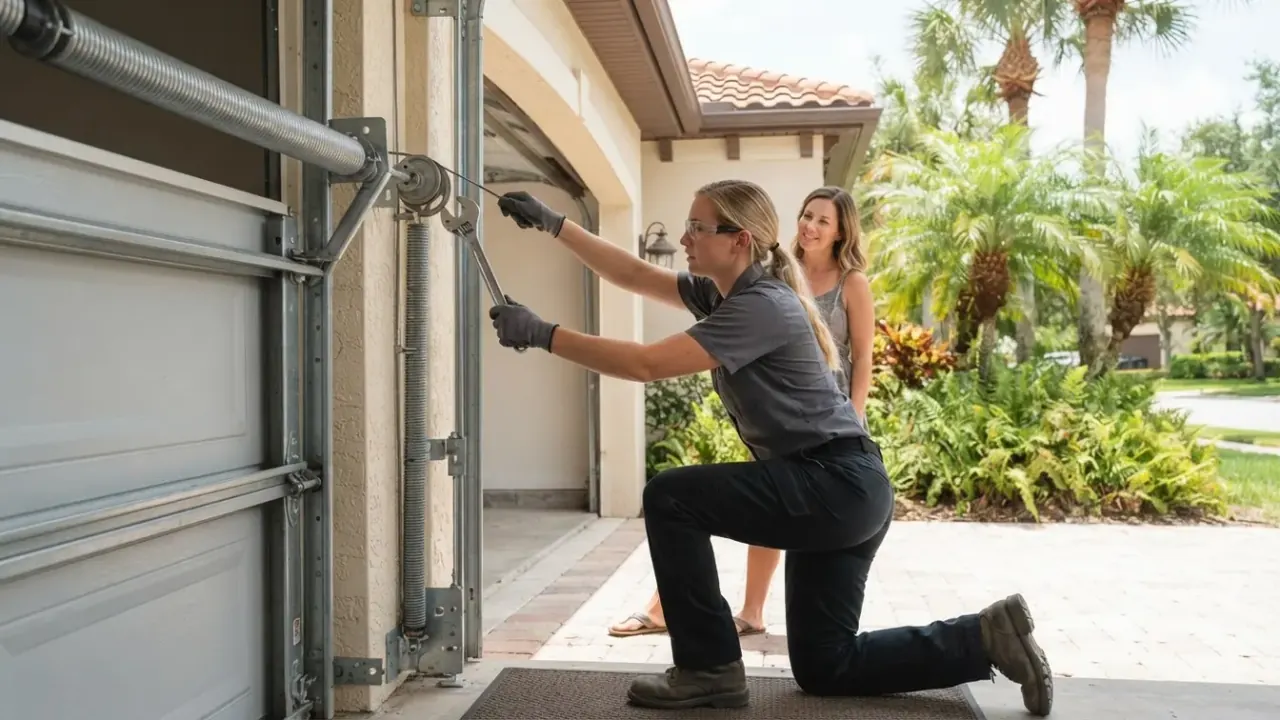
To lubricate garage door rollers and hinges yourself, apply a white lithium grease or silicone-based lubricant to each roller bearing, hinge pivot point, and the torsion spring coils, then cycle the door two or three times to distribute the lube. The whole job takes about 20 minutes and costs less than $15 in supplies. This guide walks you through the exact steps, the lubricants that hold up in Tampa's humidity, and the warning signs that mean you should stop and call a professional.
We're garage door repairs Tampa Fl, and we've serviced thousands of doors across Hillsborough County. Most of the noise complaints we get could have been prevented with a simple twice-a-year lubrication routine. Here's how to do it right.
Why Lubricating Your Garage Door Rollers and Hinges Matters
Garage door lubrication is the routine maintenance task that keeps metal parts moving smoothly and quietly, and it's the single cheapest way to extend the life of your door's moving components. Without it, friction builds up, parts wear prematurely, and your door starts to sound like a freight train.
Your garage door cycles open and closed an average of 4 to 6 times a day. That's roughly 1,800 cycles a year. Every one of those cycles puts stress on the rollers, hinges, springs, and bearings. Lubrication reduces that friction and spreads the wear evenly.
In Tampa, the humidity is the real enemy. Salt air near the coast and year-round moisture accelerate rust on steel rollers and hinges. A dry roller in Tampa can seize up in a matter of months, especially on doors facing west where afternoon sun bakes the hardware.
Regular lubrication also protects your garage door opener. When the door moves freely, the opener motor doesn't have to work as hard. That means fewer garage door opener repair in Tampa calls and a longer lifespan for the unit.
What You'll Need: Tools and Lubricants
You don't need a full mechanic's toolbox for this job. A few basic supplies will get it done.
- White lithium grease (spray can) - best for rollers and hinges. Stays put and handles heat.
- Silicone-based lubricant - good alternative if you want something less messy.
- Clean rags or shop towels - for wiping away old grease and dirt.
- Small wire brush - to knock off surface rust.
- Step ladder - you'll need to reach the top rollers and hinges.
- Work gloves - the metal edges on tracks and hinges are sharp.
What NOT to use: WD-40 as a lubricant. It's a great cleaner and water displacer, but it evaporates and leaves your rollers dry. It also attracts dust. If you use it to clean, follow up with a proper grease.
You'll spend about $10 to $15 on supplies at any Tampa hardware store. Compare that to the $150 to $300 a pro charges for a garage door lubrication in Tampa service call, and you can see why doing it yourself makes sense for routine upkeep.
Step-by-Step: How to Lubricate Garage Door Rollers and Hinges
Follow these steps in order. Work with the door closed, then cycle it to reach the top sections.
1. Disconnect the Opener (Safety First)
Pull the emergency release cord to disengage the opener. This prevents the door from moving while you're working. If you have a wall-mounted opener, unplug it or flip the breaker. You don't want the door activating while your hand is near the hinges.
2. Clean the Hardware
Wipe down each hinge, roller, and track section with a rag. Use the wire brush on any rust spots. Dirt and old grease trap grit that grinds away at the metal. A clean surface lets the new lubricant do its job.
3. Lubricate the Hinges
Spray a small amount of white lithium grease into the pivot point of each hinge - the spot where the metal plates meet and rotate. Don't soak the whole hinge; a little goes a long way. Wipe off any excess so it doesn't drip onto your car or the floor.
4. Lubricate the Rollers
Each roller has a bearing at its center. Spray a short burst into the bearing, not on the roller wheel itself. The wheel rolls along the track; the bearing is what needs the lube. If your rollers are nylon (common on newer doors), use silicone spray instead of grease - grease can degrade nylon over time.
5. Lubricate the Torsion Springs
If you have a torsion spring system (the horizontal spring above the door), spray a light coat of lubricant along the coils. Don't touch the springs with your hands - they're under extreme tension. Just spray and let it sit. For extension springs (the ones that run along the tracks), lubricate the pulleys and the spring coils.
6. Lubricate the Track
This one surprises people: don't grease the track. The track should stay clean and dry. Lubricant on the track attracts dirt and can cause the rollers to slide instead of roll. Just wipe it down with a dry rag.
7. Cycle the Door
Reconnect the opener and run the door up and down two or three times. This spreads the lubricant evenly across the moving parts. Listen for any remaining squeaks or grinding. If the noise persists, you may have a worn roller or a bent track.
If your door still shudders or jerks after lubrication, the issue might be a bent track or a failing roller. We handle garage door roller repair in Tampa and track straightening as part of our standard service calls.
How Often Should You Lubricate in Tampa?
In Tampa's climate, lubricate your garage door rollers and hinges every six months - once in spring and once in fall. If your door faces the afternoon sun or you live within a few miles of the bay, bump that up to every four months.
Here's a quick seasonal schedule:
- Spring (March-April): Lubricate after the pollen season. Pollen and dust collect on grease and turn it into a grinding paste.
- Fall (October-November): Lubricate before the cooler months. This is also a good time to check weather stripping and seals.
- After a storm: If we get a heavy rain event or a named storm, wipe down the hardware and re-lube. Salt and moisture get into everything.
If you hear squeaking before the six-month mark, go ahead and lube it. The door is telling you it needs attention. Waiting only accelerates wear on the rollers and hinges.
For homeowners in older Tampa neighborhoods like Seminole Heights or West Tampa, where many garages were built in the 1950s and 60s, the original steel hinges and rollers are more prone to rust. Those doors benefit from a garage door tune up in Tampa once a year, which includes lubrication plus a full inspection of springs, cables, and tracks.
Common Mistakes to Avoid
We see the same lubrication mistakes over and over on service calls. Avoid these and your door will last longer.
- Using WD-40 as a lubricant. It's a solvent, not a grease. It evaporates and leaves the metal dry.
- Greasing the track. The track should be clean and dry. Grease on the track collects dirt and causes rollers to slide.
- Over-lubricating. More grease isn't better. Excess lube drips onto the floor, attracts dust, and can stain your car.
- Ignoring the springs. The torsion springs carry the full weight of the door. They need lubrication too, but never touch them with your hands.
- Lubricating a damaged roller. If a roller is cracked, flat-spotted, or wobbly, lubrication won't fix it. Replace it.
If you're not sure whether a part is worn or just dry, err on the side of caution. A $5 roller is cheap; a door that comes off the track is not.
When to Call a Professional
Call a professional if your door is making a grinding or scraping noise that lubrication doesn't fix, if you see a broken spring or frayed cable, or if the door feels heavy or jerky when you lift it manually. Those are signs of mechanical failure, not a maintenance issue.
We also get calls from homeowners who tried to lubricate the torsion spring and accidentally bumped it, or who noticed a crack in the spring while they were up there. Torsion springs are under 100 to 200 pounds of tension. They can cause serious injury if they snap while you're working near them.
If you're in South Tampa or near the University of Tampa and your door is older than 10 years, it's worth having us out for a garage door safety inspection in Tampa. We check the springs, cables, rollers, hinges, and opener - and we'll tell you honestly whether it needs a repair or just a tune-up.
We're garage door repairs Tampa Fl, and we've been fixing doors across Tampa for years. If you'd rather not climb a ladder and deal with grease, we can handle the whole job in under an hour.
Frequently Asked Questions
What is the best lubricant for garage door rollers and hinges?
White lithium grease is the best all-around choice for steel rollers and hinges. It handles heat, stays put, and doesn't attract as much dust as oil-based lubes. For nylon rollers, use a silicone-based spray instead. Avoid WD-40 as a standalone lubricant - it evaporates too quickly.
How often should I lubricate my garage door in Tampa?
Every six months in Tampa's humid climate. If your door faces the afternoon sun or you live near the bay, lubricate every four months. You should also re-lube after any heavy storm or if you start hearing squeaks between scheduled maintenance.
Can I use WD-40 to lubricate my garage door?
No. WD-40 is a water displacer and cleaner, not a long-term lubricant. It evaporates and leaves metal dry, which can make squeaking worse. Use it to clean rust off hinges if you want, but follow up with white lithium grease or silicone spray.
Why is my garage door still noisy after lubricating?
If lubrication didn't quiet the door, you likely have a worn roller, a loose hinge, or a bent track. Those are mechanical issues that need repair, not more grease. Call a technician to inspect the rollers and track alignment.
How much does a professional garage door lubrication cost in Tampa?
A professional lubrication service in Tampa typically runs $150 to $300 in 2026, depending on the door size and whether it's bundled with a tune-up. Many companies, including ours, include lubrication as part of a standard maintenance visit.
Get Help with Garage Door Repair in Tampa
If your door is still noisy, jerky, or just not acting right after you've lubricated it, we can help. We handle everything from roller replacement to spring repair, and we'll give you a straight answer on what's actually wrong.
Call garage door repairs Tampa Fl at +17739156384 to schedule a service call. We serve all of Tampa, including South Tampa, Westchase, and New Tampa.